Grid Vulnerabilities Threaten AI Expansion
A minor power failure in Northern Virginia highlights the precarious relationship between hyperscale data centres and energy infrastructure.
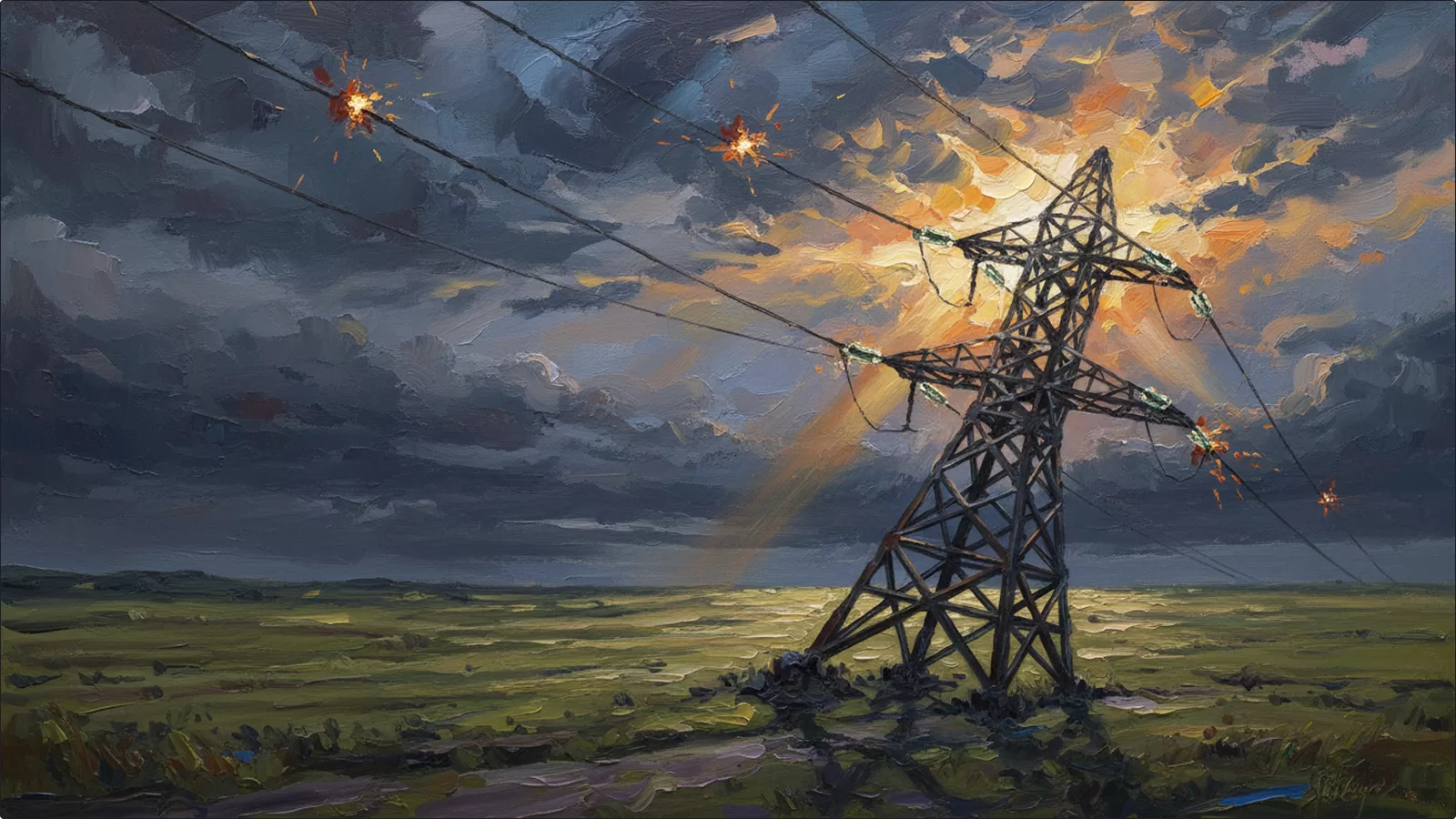
The rapid expansion of artificial intelligence infrastructure relies on an assumption that is increasingly difficult to defend: the absolute reliability of the electrical power grid. A recent report by TechCrunch highlighted a close call in Northern Virginia, where a single fallen power line revealed how poorly data centres respond to local grid disruptions. In a region often referred to as the epicentre of global internet traffic and high-density compute, the incident serves as a stark warning for enterprise AI operators and utility providers alike.
As hyperscalers accelerate the deployment of cluster infrastructure for training and inference, energy consumption has scaled exponentially. Yet, the physical infrastructure supporting these facilities remains vulnerable to single-point failures. Addressing this fragility demands a fundamental rethink of how data centres integrate with municipal energy grids.
The Microgrid Imperative
Traditionally, data centre operators have relied on uninterruptible power supplies and legacy diesel generators to handle short-term outages. While these systems offer basic failover protection for conventional cloud workloads, they are poorly suited to the continuous, massive power draw of modern AI hardware clusters. Abrupt power transitions can cause hardware strain, job interruptions, or expensive cluster re-initialisation procedures.
To build true resilience, operators must move beyond passive emergency generation towards active microgrids. Integrating dedicated battery energy storage systems alongside localized renewable generation allows facilities to ride through transient grid faults without interrupting ongoing compute workloads.
Continuous compute demands require an evolution from emergency backup power to active grid co-management.
Furthermore, sophisticated microgrid architectures enable data centres to operate as flexible loads. By adjusting non-critical compute tasks or drawing from on-site storage during peak grid stress, facilities can mitigate local grid congestion rather than exacerbate it.
Structural Policy and Grid Co-location
The bottleneck is not merely technological; it is structural. According to TechCrunch, the Northern Virginia incident exposed systematic shortcomings in how data centres manage grid disruptions. Resolving these issues will require closer co-ordination between technology companies, utility regulators, and regional transmission organisations.
Currently, transmission planning operates on multi-year timeframes that lag behind the rapid construction schedules of AI facilities. Policy frameworks must adapt by prioritising co-located energy projects, where generation and compute are built in tandem. Regulatory bodies should also mandate standardised grid-response protocols for facilities exceeding high capacity thresholds. Without structural incentives to align compute expansion with grid modernisation, regional networks will remain vulnerable to cascading failures caused by routine weather events or physical accidents.
Strategic Risk Management for Hyperscalers
From an enterprise perspective, reliance on local grid stability represents an unmitigated operational risk. Enterprise leaders planning multi-billion-dollar AI investments must incorporate energy infrastructure resiliency into their primary site-selection criteria.
Analysing site viability now requires evaluating local utility redundancy, transmission capacity, and regulatory support for clean on-site power generation. Furthermore, AI workloads should be architected for geographical failover, enabling non-latency-sensitive training runs to migrate dynamically across regional clusters when power grids experience stress.
A single fallen power line in Virginia should be viewed not as an isolated mishap, but as a structural prompt. The future of AI relies as much on high-voltage engineering and grid policy as it does on silicon architecture.
Sources & further reading
Writes and edits Troiana Signal’s coverage of AI, product building and modern discovery.
Join the discussion
Useful counterpoints, first-hand experience and corrections are welcome. Every response is reviewed before it appears.
No published responses yet. Start with something that adds to the article.